2018: The Year in Books – ‘1984’ by George Orwell

(In part two of our 2018: The Year in Books series, we look at an obscure book by some ex-soldier guy. It’s set in 1984, so I guess it’s some kind of alternate-history story, like in Command & Conquer: Red Alert? I don’t know, I didn’t really get it. Anyway, here’s my review.)

The How Have I Not Already Read This Book? Award

George Orwell – 1984
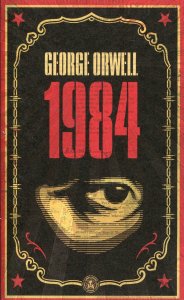
1984

1984 is a book by George Orwell.

It’s really hard to write an introduction for 1984. Let me try again:

Okay – 1984 is a good book by George Orwell. Set in an alternate future (the eponymous 1984) where the world is locked in an eternal war between three faceless superstates, it explores Oceania – a sprawling state controlled by an omni-present ‘Party’ that enacts near total control over the lives of its inhabitants.

One man, Winston Smith, secretly hates the Party, and wishes to rebel against it, despite the knowledge of what will happen to him if (when) he’s found out. How will our plucky protagonist fare – will he manage to stick two fingers up to the totalitarian power that seeks to control him? Where will this small rebellion end? (spoiler: not well.)

1984 is a book filled with beautiful moments of humanity surrounded by endless, grinding fear. I could spend pages listing them – the moment Winston receives that note at his desk. The joy of an afternoon alone, entirely unwatched. The way the half-remembered children’s rhyme about the bells of St. Clement’s stands in for an entire world of light and hope and art and love that was stolen from us.

1984 is also a novel so dedicated to its worldbuilding that, reading it, I was half-surprised the Science Fiction-allergic literary establishment didn’t call it artless trash the moment it was published. This worldbuilding is some of the most thoughtful, interesting work I’ve seen in speculative fiction, and I even liked the chapter-long ‘here is loads and loads of information about the wider sociopolitical situation’ text dump halfway through the book that everyone else seems to hate. The world of 1984 is fascinating, and seems to say so much about our own.

But does it, though? I’ve heard the criticism more than once that Orwell’s future dystopia ended up being flat-out wrong – that the terrible future of humanity he predicted never came true. Is this the case? And if so, is there anything to be gained from 1984 other than a nice, feelgood story?

My response would be – sure, okay, we don’t currently live in a faceless superstate that crushes dissent with an iron fist. Well done, yes, that is not a true fact. But speculative fiction doesn’t have to be a factually correct prediction of the future in order to say something true.

(also, fun note: while most societies are arguably not trending towards 1984, China arguably is. Yes, its not exactly the same, but the ruling party’s suppression of free speech, its crackdown on democratic and religious autonomy, and its ‘social credit’ system are all genuinely awful and terrifying. So maybe it does successfully describe some aspects of a society – just not necessarily our own.)

And 1984 feels true in important ways, regardless of if it ever could become factually true. To pick just two points, then: it describes a betrayal of the brighter future that technology promised us, and its replacement with a life of endless work and drudgery. (sound at all familiar?) And it describes an increasingly powerful state not by the people and for the people, but over the people, and for itself. (it’s just shooting fish in a barrel at this point.)

So, to conclude: 1984 is a book by George Orwell. It describes a future version of Britain that is wrong and didn’t happen in some ways, but right and maybe kind of did (or will) in others. I like it, and it’s very good. I hope you like it too.

Thanks for reading all this absolute nonsense. If you liked it, and are interested in more nonsense, follow me on Twitter here.

(I should also address the fact that the book is pretty sexist. I could argue that it’s a product of its time, and sure, it is, but so what? That doesn’t prevent it from being (I’m sorry for using the word and revealing myself as a triggered lefty snowflake) *problematic*.

I will say, however, that I think it kind of works in the setting (regardless of Orwell’s intent) – in this bland, crushing society it just kind of makes sense that people wouldn’t have divested themselves of reductive views of women. And it feels very fitting for Winston’s character in particular. That’s not a spirited defence against charges of sexism – just a suggestion that it’s not *juts* a bug, but also sort of a feature, in this specific book at least.)
Posted in Books | Tagged , , , | Leave a comment

2018: The Year in Books – ‘Pachinko’ by Min Jin Lee

It’s been a long year – one that in global terms can be generously called ‘iffy’. Just environmentally speaking, we’ve got devastating wildfires across the US, threats of widespread climate change-induced famine, and rapidly increasing plastic pollution in the world’s oceans. (but the UK is going to be increasing the disposable plastic bag charge from 5p to 10p, so who knows, it’ll probably all come out in the wash)

What better way to distract ourselves, then, than to sit down and read a book about historical Spanish painter Diego Velázquez? Or a made up game played between an interstellar empire and a post-scarcity anarcho-communist utopia? Or a collection of poems about getting old and being a bit sad about it? Sounds good? Well, then do I have just the list for you…

(As always, most of these books weren’t published in 2018. And this is just a list of the books I enjoyed the most a clearly objective list of factually correct opinions. The books are presented in no particular order, except when they’re not.)

The Multi-generational Sprawling Masterpiece Award

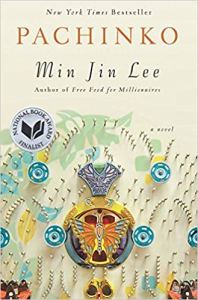
Min Jin Lee – Pachinko

Pachinko

Pachinko is the story of Yangjin and Hoonie – a loving couple living in Korea under Japanese rule in the early 1900s. Oh no wait, actually it’s about their daughter Sunja, who meets a wealthy man, falls in love, gets pregnant, and then finds out he’s already married. Who then marries an understanding, charitable Christian minister, and moves with him to start a new life in Osaka, Japan. Oh, actually it’s about her sons Noa and Mozasu, who struggle with their sense of iden – oh wait, now it’s about Mozasu’s son Solomon, who…

Pachinko is the story of several generations of a Korean (and later Japanese-Korean family) as they face economic hardships, anti-Korean discrimination, and questions of identity in a country that does not care about them; that sees them as aliens – even those who were born there, and who feel no connection to Korea – their supposed ‘home’ country.

Min Jin Lee does an astonishingly good job of characterizing each of Pachinko’s central characters, and in allowing the reader to see the multi-faceted, unique ways in which said characters struggle with their identity, their history, and their place in Japanese society. I fell in love with every member of the family, and felt a strange, jolting sense of loss when their story was suddenly over, and the mantle was passed to the next generation.

The thing that stuck with me the most, however, was how well Pachinko portrays the loss of context faced by the younger generation of a family. How they can look at their parents, grandparents and think ‘god, they’re so old-fashioned’ – sigh and roll their eyes at their backward thinking, lack of courage, fatalism. And all the time you’re just sitting there, screaming internally: “No, you don’t get it. You weren’t there.” We followed the story of Sunja from a childhood in occupied Korea to her old age decades and decades later. We saw the hardships of moving to a new country that has no time for her, of losing her husband, of war and famine, of…

And now, to her children she is a stubborn old woman. To her grandchild, she is even more distant than that. But we were there. We saw itAnd now it’s gone – her generation is done, and how could her grandson ever really understand her story?

As we get older we come to understand our parents more and more – never perfectly, but we can form a picture that was previous denied to us. For many of us, though, our grandparents remain enigmas – even if we do spend time with them, even if we learn about the facts of their lives, we miss the context, and we rarely get a sense of what formed them into the people they are (or, more and more rapidly – the people they were). Pachinko does a wonderful, heartbreaking job of seeing the world slip by you, and knowing that your story will never be fully understood by those who weren’t there to see it happen.

Posted in Books | Tagged , , , | 1 Comment

The Red Market Dev Log #9: A New Release!

In today’s fortnightly update: a new build of the game!

As promised, and just squeaking in before the end of the year: it’s the first major update for The Red Market!

(play it online here!)

I’ve finally finished re-building the game from the ground up, and adding a fair bit to it. It should be a lot more stable now (let me know if it’s not), with a lot fewer bugs (hubris). I’ve also added lots of fun new secrets, memories, rumours, etc., and made another pass for editing and game flow, so it should feel just that little bit nicer to play, too.

This update doesn’t include significant new content, but from here on out I’m going to be focusing solely on adding  new monsters, storylines, NPCs, and the like. So look out for The Red Market’s next new addition: A River-Horror / The Bishop-fish…

A river-horror – a cursed charm fashioned by superstitious anglers? An aquatic monster, all bone and gristle? A mooncalf shucked by some farmer into the river?

Your curiosity is piqued, at the very least.”

Happy New Year to you all, and here’s looking forward to new, fun, semi-regular, sometimes-wholly-disgusting aditions to the game in 2019.

And remember, you can follow me on twitter through the magic of hyperlinks by clicking here. The current early version of The Red Market can be played online here, if you haven’t already!

Nick

Posted in My Games, The Red Market | Leave a comment