2018: The Year in Books – ‘Little Fires Everywhere’ by Celeste Ng

(In part four of our 2018: The Year in Books series, we look at a novel set in a fantasy world where rich, white suburbanites act like spoiled children. Is it just a fun story, or can this strange land of Shaker Heights, Ohio teach us something about the real world?)

The Rich People Are Actually Just Not Good Award 

Celeste Ng – Little Fires Everywhere
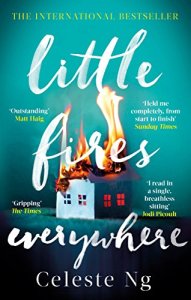
Little Fires Everywhere

Little Fires Everywhere describes the life of the Richardsons – a comfortably well-off family in the exclusive, all-American suburb of Shaker Heights, just outside Cleveland, Ohio. The Richardsons are a perfect family: the mother, Elena, a journalist for the local paper, the father an important lawyer, the children varying shades of academic and athletic excellence. Except for Izzy, who is rude and rebellious and not quite what a community such as Shaker Heights is looking for.

Into this idyllic (obviously actually suffocating and awful for anyone with a shred of self-awareness) world comes Mia, and her daughter Pearl. Mia is an artist, one who lives a deliberately frugal, bohemian lifestyle, and who never settles in one place for too long. Needless to say, Elena Richardson just cannot handle this.

How can someone actually want that life? Scraping by on part-time waitressing jobs, and the occasional income from her artwork? Sleeping on futons and sitting on crappy, old couches bought second-hand – never really owning anything, and never really belonging anywhere?

For a while Little Fires Everywhere follows the lives of Elena Richardson, her children, Mia, and Pearl. Elena decides to ‘do a good deed’ and let Mia and Pearl rent a floor of her second house for well below market rates. Teenage Pearl and the teenage Richardson children become friends, and the expected teenage things happen. Mia and Elena have some brief interactions where Elena exercises her power as benevolent feudal lord in ways that are subtle to her; blindingly obvious, visible-from-space to Mia.

It’s compelling (if a little aimless at times), and Celeste Ng’s skill for writing characters really shines. But of course it can’t last. Eventually scandal rocks Shake Heights, and everyone picks a side. Elena and Mia are on opposite sides, each tangentially involved, and needless to say Elena Richardson just cannot handle this.

From here Little Fires Everywhere gradually changes from a story about fitting in (and not fitting in) in this rich, exclusive neighbourhood, to the story of Elena Richardson: an outright villain. And the best kind of villain: a villain who’s convinced they’re only doing what is right and reasonable. A villain who would be genuinely baffled – scandalised even – if someone were to question her, or her concept of fairness and justice. A villain with a position in high society, and who will use every social privilege at her disposal to thumb the scales, and expose the liars and cheats and grifters who all just happen to be the exact people who respectfully disagree with her.

In other words, Little Fires Everywhere is a book about the balance of power in society, and how it is invisible to some (the people with power), and incredibly visible to others (the people without it). It uses Ng’s unmatched ability to get into the heads of her characters to show the way baffling amounts of social privilege can completely change a person’s way of thinking.

But instead of (just) portraying things from the underdog’s perspective, or having an author stand-in character to occasionally say ‘wow, she’s being a bit awful here, isn’t she?’, Ng eagerly embraces Elena Richardson’s point of view. She is almost never challenged – what she does is portrayed as obviously right and fair and reasonable – and the reader is expected to be smart enough to recognise that she is an absolute monster, though sadly not an exceptional one.

I’m going to finish this with a quotation, so I can make myself look smart: Endo Shusaku once wrote “Sin, he reflected, is not what it is usually thought to be; it is not to steal and tell lies. Sin is for one man to walk brutally over the life of another and to be quite oblivious of the wounds he has left behind.” Little Fires Everywhere is this Endo Shusaku quotation: The Novelisation.

Elena Richardson never, ever understands what she did wrong. She digs into people’s past, invades people’s privacy, breaks a handful of quite important laws, and just about ruins two (or possibly three) people’s lives. But will she ever be aware of that fact – will she connect the dots and realise just how awful she is? Of course not. Never in a million years. And that’s precisely what makes her just the worst.

Thanks for reading this important piece of literary analysis (it has a quote in it, so you know it’s important). If you liked it, and do the whole regrettable Twitter thing, follow me on Twitter here.


Posted in Books | Tagged , , , | Leave a comment

Let’s Explore: Mt. Shiroyama, Gruelling Battleground of the Last Samurai Rebellion

Some time ago I visited the city of Kagoshima on a business trip. While there, I was lucky enough to be pointed towards Mt. Shiroyama – a small mountain just outside the city itself. I was told it was a beautiful, tragic place, littered with the still-fresh wounds of war, and I knew I was in for a very special day.

The site of the Battle of Shiroyama, this is the place where the 1877 Satsuma rebellion against the new Meiji government was finally, brutally, crushed, as fictionalised in the film The Last Samurai.

1200px-shiroyamabattle

Making my way up the mountain on foot, it was hard not to feel transported back to the very day of the battle; so vivid were the remnants still littered across the mountain. Join me then, if you will, on this photographic journey through time to Mt. Shiroyama, Gruelling Battleground of the Last Samurai Rebellion. Here is everything (and I do mean everything) I saw on that day.

(warning: some readers may find the following pictures troubling)

IMG_1072

img_1115

IMG_1223

IMG_1134

img_1070

I hope this has been as educational for you as it was for me. I certainly was not disappointed by all the signs, and historical sites that were definitely there on the mountain and not fake and made up when I visited on my one (very rainy) day off during a tiring business trip.

(okay, so the view from the was pretty good, even if it was raining buckets all day)

img_1119

Posted in Japan | Tagged , , , , , | Leave a comment

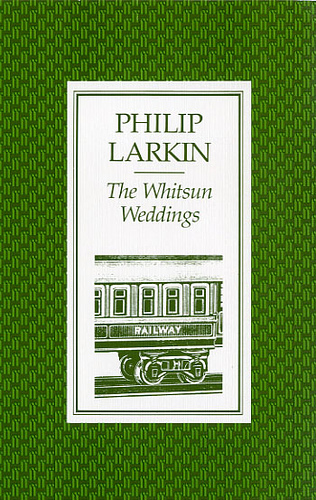
2018: The Year in Books – ‘The Whitsun Weddings’ by Philip Larkin

(In part three of our 2018: The Year in Books series, we look at a book of poetry WAIT COME BACK. Just give me five minutes, and then you can leave if you’re really not having fun. I promise.)

The Best Poetry Wot I Read Award

Philip Larkin – The Whitsun Weddings

The Whitsun Weddings

2018 has been the year in which I seriously tried to get into poetry, and read something other than Sylvia Plath for once. But Nick, you say, surely someone who cares about literature should naturally love poetry, since it’s a vital part of the medium, with a longer, more varied history than any other form? My answer to this is: no.

I really struggle with poetry. I fall in love with about 10% of the stuff I read, and kind of absolutely hate the other 90%. I think my problem is that I want a really specific thing from poetry, and can’t stand anything that is not that one specific thing. What I want is: a vivid description of a moment, or a specific feeling, that I feel I can understand (at least in part) the first time around, and that opens up on further readings. What I often seem to get with poetry is something like:

roses on the stairs. A rich

thick stain outside. I Remember u

But you are not you is you. Dark pleated waves when I was four but

but I am not four and never was. My father

was distant sometimes

I just can’t stand it. I don’t want to call this aesthetic bad, but it’s really, really not for me, and it’s absolutely everywhere. At best it feels like English homework: read these opaque words on a page and try your best to figure out what they hell they’re about. At worst it feels like someone in love with their own vocabulary, and the fact that you can Capitalise certain Words whenever You Want.

Call me a philistine. Call me a reverse snob. Whatever – like I said, it’s not for me, and I’ve learned enough in life not to judge something as bad merely because I don’t like it.

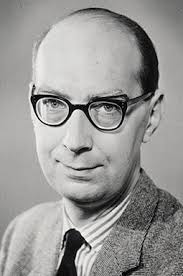
philip_larkin_sexgod

Every 90’s kid will remember having a poster of teen heartthrob Philip Larkin above their bed.

So, why did I like The Whitsun Weddings so much? Other than Philip Larkin’s raw sex appeal, it’s hard to say. I don’t want to just answer by saying ‘it’s not all the bad poetry things I don’t like’. But I also don’t want to just say ‘it’s very nice and beautiful with good words’, even though it is. It’s hard to be more specific, but I’ll give it a shot:

(1) I feel, after reading most of the poems in The Whitsun Weddings, that I understand Philip Larkin a little more as a person. They’re personal, kind of esoteric poems (in content, if not in structure), and they paint a picture of a very specific personality.

(2) The poems reward a second reading very well, but don’t require one to be enjoyable, or leave a strong impression. I feel like I got them almost immediately, and didn’t have to Agatha Christie may way towards some secret answer.

(3) A lot of the poems – even the more serious ones – are very funny. Sure, not laugh-out-loud funny, but a dry sense of humour that really works, and that feels true to life. The poems’ moments of listlessness and quiet dread are elevated from maudlin observations of fairly universal emotions, to something that feels personal and unique, and that really resonates with ol’ Nick ‘listlessness and quiet dread’ Keirle here.

(4) I like basically anything where someone goes ‘oh god, I’m old now and life passed me by’, so I was bound to like this because there’s loads of that good shit.

So that’s what I think about The Whitsun Weddings. If you’re still not sold on it, read the titlular poem (which is very nice and beautiful with good words), and if you don’t like that then it’s probably not for you. If you want to try out something a little different, I’d recommend Sylvia Plath’s Crossing the Water, which I also read this year. And if you want to try out something very different that’s mostly poems about getting drunk or having a cat or doing a big poo, I’d recommend Charles Bukowski’s You Get So Alone at Times That it Just Makes Sense.

(Thanks for reading all this absolute nonsense. If you liked it, and are interested in more nonsense, follow me on Twitter here.)

Posted in Books | Tagged , , , | Leave a comment