(2016) The Year in Books – Voices from Chernobyl: The Oral History of a Nuclear Disaster

[This is Part One of my review of my favourite books I read in 2016 and it’s been another year and oh my god I haven’t written anything on this blog in all of 2016 what an absolute joke. As always seems to be the case, none of these books were actually published in 2016, but they’re all well worth reading if you’re into mid-20th century Britain, nuclear disaster, the march of colonialism, growing up in post-war Naples, the various lives of Afghan families, 1910’s Japanese obsession with mental illness, vegetarianism-oh-wait-it’s-actually-also-about-severe-mental-illness, the various lives of Indian emigrants, art theft, or islands in the middle of nowhere. 

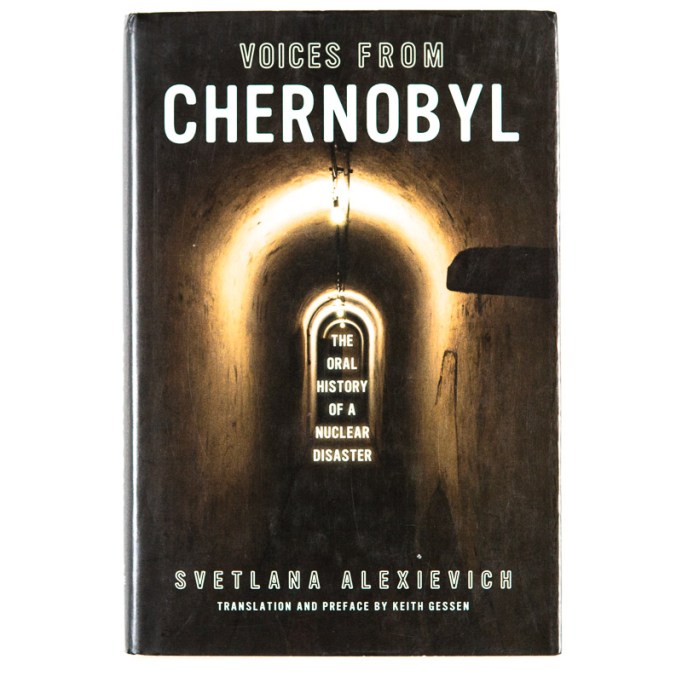
This post will be looking at the first of my nine runner-up books of the year: Voices from Chernobyl: The Oral History of a Nuclear Disaster by Svetlana Alexievich.]

voices-from-chernobyl

Svetlana Alexievich – Voices from Chernobyl: The Oral History of a Nuclear Disaster

I’ve always been fascinated by Chernobyl, combining as it does my interests in crumbling Soviet infrastructure, desolate landscapes, and the dull sense that mankind is hurtling towards its own destruction. It’s hard for pessimistic weirdos like me not to invest the place with a kind of strange, impossible-to-describe romance, especially after falling in love with (Chernobyl-predating) films like Stalker, and novels like Roadside Picnic, both of which have been eagerly adopted by the Chernobyl-obsessed fanboys of the world.

Svetlana Alexievich’s book Voices of Chernobyl is the best antidote I’ve found for this weird romanticism. Her series of extended interviews cut through the images of haunting beauty we see so often now – Pripyat abandoned, reclaimed by nature; abandoned schoolbooks and rows of decommissioned jeeps and the branches of trees straining through crumbling ceilings – to what what we should really think of when we think of Chernobyl: a series of preventable bureaucratic failures that led to decades of suffering almost too widespread and myriad to comprehend.

Presented as extended monologues on the part of her interviewees, rather than the traditional question-and-answer format, Voices of Chernobyl feels incredibly intimate, and this approach lets the real individuality of the victims of the disaster and its 30-year-and-counting aftermath show through. Residents forced to evacuate in the middle of the night, taking next to nothing on the understanding that they would be returning any day; Soviet administrators scrambling to deal with the fallout (radioactive and otherwise) while maintaining the standing of the regime they serve; people who illegally returned to live in the exclusion zone, unable or unwilling to countenance a danger all around them they can neither see nor feel; soldiers ordered to contain the deadly meltdown, shovelling radioactive debris within spitting distance of the reactor, wearing no protective clothing whatsoever; wives of these men decades later as their bodies begin to literally fall apart.

Each story is unique; its own angle on the disaster and its consequences, and if Voices of Chernobyl succeeds at one thing (and it succeeds at many) it’s at transforming history from the general to the individual – the statistic into a million individual tragedies that call out with urgency, indignation, and, at times, an overwhelmed, stultifying sense of apathy. Rarely have I encountered a work of history that felt so human.

Posted in Books | Tagged , , , | Leave a comment

(2015) The Year in Books – Part Three

[In Part Three of my review of my favourite books of 2015 I finish up the list with Helen MacDonald’s ‘H is for Hawk’, Adaobi Tricia Nwaubani’s ‘I Do Not Come to You by Chance’, Tove Jansson’s ‘The Summer Book’, Umberto Eco’s ‘The Name of the Rose’, and Ogawa Yoko’s ‘Revenge’.]
HIsForHawk

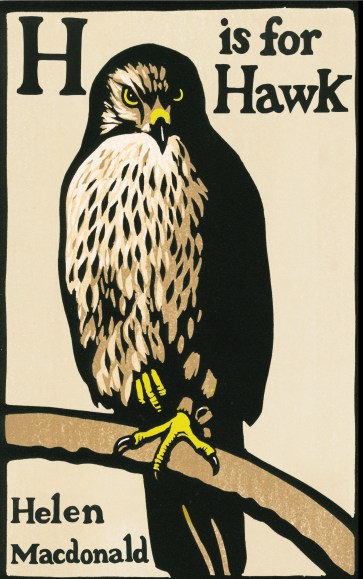
Helen MacDonald – H is for Hawk

After the death of her father, Helen MacDonald buys and starts training a young goshawk. Lauded by many as a memoir beautifully dealing with grief, and the process of coming to terms with tragedy, I think it’s something kind of different. To me H is for Hawk is a memoir beautifully dealing with the avoidance of grief, and the process of ignoring tragedy in favour of something else.

In taking in the young, unsteady goshawk, MacDonald’s world begins to revolve around it. She spends countless hours attempting to deal with the aggressive, temperamental, at first frightened, bird. Gradually she’s pulled from her regular life into a headspace where the only thing that seems like it matters is the goshawk, and every up and down takes on some colossal, primal importance.

This memoir begins to interweave with a biography of T.H. White, author of the Arthurian novel The Once and Future King, as well as The Goshawk – an account of his own time struggling, and ultimately failing to train a young goshawk. At first seemingly only related by their choice of Goshawks as subject matter, these two narratives begin to mirror each other in far rawer ways. White’s attempts to deal with his unruly goshawk are often misguided and even cruel, but like MacDonald, betray someone trying desperately not to come to terms with something.

They both have their share of grief, and things they need to address, but in large part they don’t do that. They focus everything on the goshawk, and in doing so their struggle with the bird takes on a new importance. A small success in training becomes a revelatory experience, and a failure or setback becomes reason for deep, personal hurt. Spending hours whistling for your bird in the rain as it steadfastly ignores you is no longer just about the bird. The feelings of grief latch onto this new obsession, and it becomes a kind of proxy – a way of dealing with and overcoming grief by ignoring it completely.

Carried on by MacDonald’s beautiful prose – at times raw and emotionally cutting, at times stony-eyed and obfuscating – H is for Hawk explores a side of grief that is far more complex and untidy than we might like to think.

IDoNotComeToYouByChance

Adaobi Tricia Nwaubani – I Do Not Come to You by Chance

A recent graduate, Kingsley is trying to find a decent job as an engineer to support his family and win over the love of his life. But competition is intense, and the job market in Nigeria right now is no great shakes anyway. His family problems start to mount, and money starts slipping away, and very suddenly he’s being groomed for a job with his uncle – the ludicrously successful email scam magnate known to as Cash Daddy.

What follows is Kingsley’s descent/ascent into the lucrative, morally dark-dark-grey-black world of scamming wealthy westerners out ludicrous amounts of money. I Do Not Come to You by Chance is a funny, honest exploration of this kind of life, and the modern face of Nigerian politics and economics. Kingsley changes a great deal throughout the novel – away from his naive, hard-working, and honest origins and towards a cunning, persuasive, self-justifying scammer. But sometimes his self-justifications are convincing, and he is providing for a lot of people who otherwise might have nothing.

Throughout, it’s morally complex, and manages to avoid the tiresome hubris-and-nemesis that these kinds of stories just cannot get away from. It’s not a morally-instructive tale, where Kingsley learns the error of his ways and gives up his fortune, or else dies in a hail of gunfire. There are just actions and consequences – some good, some bad, some not quite either – but all believable and none feeling like simply a narrative conceit designed to make a grand point. It doesn’t condemn Kingsley’s actions, and it doesn’t revel in them either. It presents a person’s actions, their consequences, and the context – both personal, economic, socio-political, etc. – that led them there. That it does so in such a personal, witty way is icing on the cake.

TheSummerBook

Tove Jansson – The Summer Book

From the author of The Moomins and the Great Flood, Comet in Moominland, Moominsummer Madness, The Exploits of Moominpappa,  Tales from Moominvalley, Moominpappa at Sea, and loads of other books about Moomins, comes a book 100% not about Moomins, but instead about a young girl Sophia, her father, and her grandmother living on a remote island in the gulf of Finland for the summer.

The Summer Book is lovely and charming. Sophia is alternately naive, childish, curious, stroppy, playful, and stubborn, but unlike 95% of all children in fiction is neither (a) incredibly cloying, nor (b) wise beyond their years (and incredibly cloying). Her grandmother is world-weary, childish, curious, stroppy, playful, and stubborn, and their relationship with one another is the backbone of the novel.

Placed very firmly in the Cannery Row genre of ‘Nothing really happens but it’s just really nice’, The Summer Book follows such compelling narrative beats as ‘Sophia is bored’, ‘Her grandmother wants to have a nap’, and ‘Her grandmother is annoyed that some rich guy moved onto a nearby island and he’s probably some kind of dick’. There’s an almost storybook, Oliver Postgate-esque BBC children’s cartoon approach to the proceedings, which I guess makes sense considering, you know, Moomins. But while it’s light-hearted and charming throughout, there’s a string of sadness and real weight traced throughout, dealing with transience, and endings, and death.

The Summer Book feels like a vaguely-remembered childhood summer holiday in the countryside – you explore the surrounding trees and scrublands, eat ice cream and get it down your hands, jump into the swimming pool over and over again, then go to bed and do it again the next day. But one night you can’t get to sleep and you lay there looking up at the bunkbed above you feeling a kind of strange muted sadness you can’t yet and never will be able to put into words. Then you wake up the next day and run down to the beach and have fun again.
TheNameoftheRose

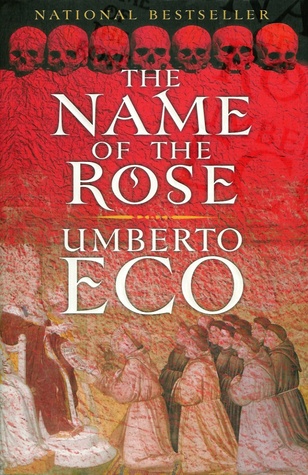
Umberto Eco – The Name of the Rose

Italy in 1327. An apparent suicide occurs at a monastery, and the recently arrived William of Baskerville is called upon to investigate the circumstances of the death. Soon after, another death occurs, and then another, all under mysterious circumstances. William starts searching for a murderer, and is drawn again and again to the abbey’s library – famous for its voluminous collection, but also the source of strange rumours, and strictly off-limits to all but the librarian.

So, in a sense a murder mystery, but not really. There are murders, and clues, and a motive that are searched for and eventually discovered, but The Name of the Rose is a book deeply in love with its setting, moreso than anything else. It explores the lives of the monks in great, loving detail – their schedules, their reading habits, their arguments about their reading habits, and the theological and political machinations occurring throughout Europe that seep into their day-to-day lives. And while at times there are bursts of action, and everything moves very fast, for the most part it moves at the ponderous, unhurried speed of life in this abbey in northern Italy in the early 14th century.

It’s a novel that takes a lot of patience, and probably a laptop open to Wikipedia if you don’t happen to remember all the 14th century political and theological studies you no doubt learnt at school. But if you can ease yourself into the slow, endlessly intricate and dense world of the abbey, you’re rewarded with something so special it’s impossible to describe. Umberto Eco’s beautiful prose brings to life a world so ornate and numinous, yet warm and human that I read 500 pages and never wanted to leave. For all the murder and long discussions concerning the suffering of Jesus, reading The Name of the Rose feels like slipping into a warm bath. I read this book nearly eight months ago now and I still think about it regularly. It’s difficult and weighty, and it expects you to keep up with a lot, but every bit of effort you put in will be returned to you ten times over.
Revenge

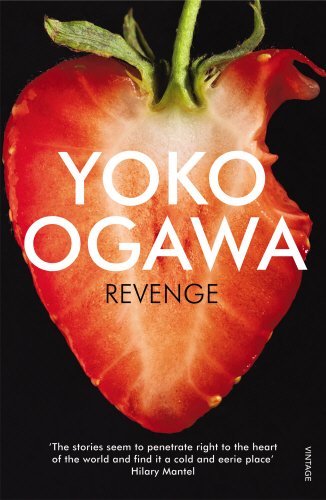
Ogawa Yoko – Revenge

Last year I fell in love with Ogawa’s collection of three novellas The Diving Pool, Pregnancy Diary, and Dormitory. I couldn’t put my view of her writing better than the Hilary Mantel quote on my copy of the book (see the picture above). She has a way of drilling down into tiny moments, observations, spasms of unstructured feeling, that is incredibly beautiful and disquieting, and at times downright nauseating.

This year I read most of the rest of her English-translated work in the form of her novel Hotel Iris (Ogawa’s cold, eerie look at the world turns to sexual matters, with a result that’s unsurprisingly disquieting, but also surprisingly touching and (to use the least erotic word ever) erotic. I loved Hotel Iris, but I loved Revenge even more.)

A collection of eleven short stories, Revenge continues with Ogawa’s unique, approach and applies it to a series of disconnected scenes – some mundane, some teetering on the edge of otherworldly (but never quite falling over the edge). A young woman stumbles upon a museum dedicated to torture, on a quite backstreet. A writer forms a polite friendship with their slightly peculiar, slightly troubling neighbour. A woman is born with her heart on the outside, and enlists a bag-maker to sew her something to keep it safe. The stories are dark; occasionally outright violent, or teetering on the edge of sadistic (again, never quite falling), and there’s a fantastic, subtle conceit you might only notice after the first few stories (that I won’t talk about for fear of spoiling the moment of discovery).

Ogawa’s writing definitely isn’t for everyone, but you really should give her a go – her writing is all short and easy to get through, and you’ll probably know after the first dozen or so pages if it’s something you’ll get on with. She’s quickly become one of my favourite writers anyhow, and I’m hoping more of her work gets translated soon because I’ve only got one left (The Housekeeper and the Professor) to go.

Posted in Books | Tagged , , , , , , , , , , , | Leave a comment

(2015) The Year in Books – Part Two

[In Part Two of my review of my favourite books of 2015 I write a couple of paragraphs about some books deserving of far more attention, and Too Many paragraphs about an obscure novel that everyone but me thinks is rubbish.]

TheMiner

Natsume Soseki – The Miner

I’d been meaning to read something by Soseki since I moved to Japan two years ago, but I was always put off by their standing as ‘classic literature’ – novels a hundred or so years old that you see piled up in a corner of Waterstones; their English translations so ancient they require a second act of translation just to read them comfortably; their covers featuring strangely off-putting oil paintings of imperious women in petticoats and big hats. I’m not sure what it is, but I spent a period reading a decent number of ‘Classics’ and the best I came away with was that Crime and Punishment would be a pretty great book if we didn’t have to check in every thirty pages on Raskolnikov’s sister and her impending marriage to a boring man who didn’t matter.

Anywaymy hangups aside, I decided to read a Soseki novel, and, not knowing anything about his novels, I just picked out the first one that seemed interesting. That one was The Miner, and I’m very glad I didn’t do any research beforehand, because if I had I probably never would have read it. Because everybody but me seems to hate it.

The Miner‘s set-up has a fair amount in common with The Catcher in the Rye . Its naive-yet-world-weary protagonist (here a 19 year-old heir to a wealthy aristocratic family in Tokyo) runs away from home, but instead of wandering around New York and having an epiphany about his life, he gets roped into becoming a copper miner, descends into the lonely bowels of the earth, has an epiphany about his life, immediately forgets about it, gets really scared for a bit, kind of has another epiphany, then works for a few months as a bookkeeper and eventually gives up and goes home.

It sounds messy, and it is. The whole story is related stream-of-consciousness style by its nameless narrator as he encounters various people and places, describes his thoughts on them, explains why he thought that specifically, ponders why exactly he thought that specifically, and then eventually remembers to stop ruminating and get back to the story. It’s the kind of writing style that could easily become throw-book-against-wall irritating, as it constantly interrupts the action. And as I mentioned above – everyone seems to hate it. Pretty much everyone at the time, and most people since, even big fans of Soseki’s work, seem to either hates The Miner, or at best regards it as a weird, slightly embarrassing outlier among his other novels.

I can definitely see why people get frustrated by it, but to my mind not only are these interruptions consistently interesting and amusing, slowly-building up a surprisingly endearing portrait of its awkward, obnoxious protagonist, they’re the reason The Miner stands out as such an honest, touchingly personal book – one that has a hell of a lot more to say than most people seem to have given it credit for. Instead of being a coming-of-age story where the protagonist relates his difficult experiences and how they changed him for the better, The Miner puts its narrative to one side and goes all in on stripping its central character back piece by piece to explore his mental processes, and the way he makes sense of the world around him.

The protagonist of The Miner isn’t a character from a novel; sketched into being by clear aims and strong, definable motivations (as the book itself takes great pains to point out). Instead he’s an attempt by Soseki to capture the way real people actually are – changeable and contradictory. Sometimes high-minded and sometimes petty. Often thinking of themselves as characters with set motivations existing on a coherent narrative path, but actually wandering from place to place, cobbled together from a million tiny influences that even they themselves can’t hope to name.

We see the character’s pettiness, his high-mindedness, his arbitrary whims, and his painstaking introspection. And we also see, throughout his experiences, the way his thoughts, feelings, and even patterns of thinking are surprisingly malleable. A moment of absolute confidence suddenly gives way to feelings of helplessness with very little outside influence, only to be replaced by a life-changing epiphany that seems set to change the entire course of the narrative, only to crumble apart at the slightest touch.

At the risk of sounding pretentious at the start of the eighth paragraph of my review of an obscure Soseki novel that everyone else hates but which apparently I alone see the True Value of, I think it’s  one of the best, most honest representation of what it’s like to be a person I’ve ever read. It might be more narratively satisfying to have characters act with definite purpose and strong, consistent motivations, but The Miner shows us how people really are most of the time – just existing; acting and reacting in accordance not with deep-rooted pillars of Character and Ethics and Motivations, but with however a thousand different variables have collected together to make them feel on that day.

You can argue that the book itself isn’t interesting enough – and while I’d say the writing is sharp and witty, and strangely optimistic throughout, plenty of people clearly disagree. But you’d be hard-pressed to say that it isn’t honest. That alone makes it worth reading, in my opinion (but I also really hope you like it as much as I did).
Encylopedia_of_Early_Earth

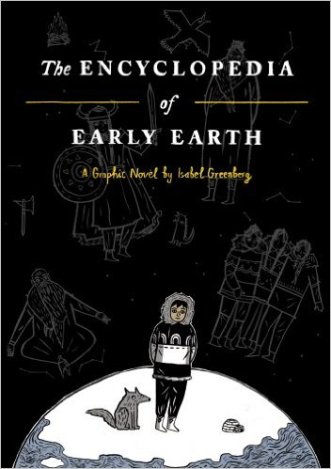
Isabel Greenberg – The Encyclopedia of Early Earth

The only comic on my list (so feel free to get angry at me for calling them comics rather than the incredibly forced ‘graphic novels’), The Encyclopedia of Early Earth, is a lovely example of the form. It’s a colourful, humorous, and very lighthearted set of creation stories and myths chronicling the travels of a storyteller through early earth.

The art is always striking – with a simple, sketched style and muted colours that sometimes give way to splashes of bright red and yellow and orange. The characterisation and dialogue skilfully walks that fine line between gently whimsical and cloyingly kooky, with clever jokes and the all-time best portrayal of a creator god in fiction with the character of BirdMan – a cross between an all-knowing cosmic architect, a bored trickster god, and slightly depressing dad figure, complete with an incredibly short, but impotent temper.

Short and sweet, The Encyclopedia of Early Earth is inventive, self-aware without being self-indulgent, simple without being lightweight, and touching in all the right places.

TheBriefWondrousLifeofOscarWao

Junot Díaz – The Brief Wondrous Life of Oscar Wao

Junot Díaz is one of those rare writers who are so good at the pure act of writing sentences on a page that it’s hard not to resent them for it. People say things like ‘Her voice is so beautiful I’d pay to hear her read a shopping list’. Well, I’d pay upwards of £9.99 to read Junot Díaz’s account of  his most recent trip to the supermarket. Every single sentence of his prose (both in The Brief Wondrous Life of Oscar Wao, and in his short story collections) is perfectly done – sticking to the page with a heft, flowing with an incredible ease, and containing that special something you can’t describe but you know you really, really want.

Oscar Wao is the story of Oscar De León, an ineffective, overweight, socially maladroit Dominican kid living in New Jersey, along with the story of 30 years of the dictator Trujilo’s stranglehold on the Dominican Republic. I read it about a year ago and I don’t have too much to say about it other than that, among other things it does extremely well, it captures the awkward desperation of a less-than-popular adolescence just about as well as I could imagine fiction doing.

Out

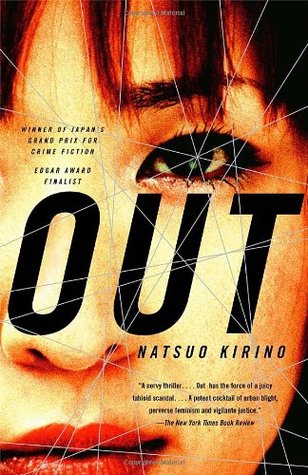
Kirino Natsuo – Out

I don’t read much crime fiction – as any other good, upright man I’ve looked at it, seen that it’s predominantly enjoyed by women, and then subconsciously decided I don’t like it, but for other reasons. After reading Out, though, I’m definitely starting to see the potential pitfalls of blindly judging an entire genre of fiction based on preconceived notions of its value.

The setup, then: A young woman working the graveyard shift at a bento factory murders her deadbeat husband in a fit of blind rage, then turns to several of her co-workers to help dispose of the body. Everything that follows (even that bit later on that comes out of left-field and becomes the focus of the whole narrative, in a twist that at first feels kind of arbitrary but actually works really well with what the book is trying to do sorry for being so vague) is a deft exploration both of the darker aspects of ordinary people, and the darker side of Japanese society.

Well, ‘the darker side of Japanese society’ isn’t really right though – Out is less interested in the sociopathic world of murder, blackmail, extortion, or the Yakuza (although all that is definitely there, sometimes in great detail), and more interested in the humdrum, far less sexy cracks running across Japanese society – things that those outside Japan almost never hear about. The drudgery of labour, the relationship-straining mountains of stress and overtime that so many jobs force upon workers, the role of women and the way they’re commodified, set aside, and ignored, and then actively (and sometimes aggressively) marginalised if they try to overcome this barrier. An ageing society with fewer and fewer economic prospects for both the young and the old. And the complicated, rather unhappy relationship Japan has with foreigner residents – especially the large population of Japanese-Brazilian workers.

 Out is also a crime story, of course, with suspense and nail-biting tension, and pretty disturbing depictions of suffering and mutilation. But rather than being two part tenuously linked, it marries these two aspects incredibly well – using one to explore and deepen the impact of the other.
It’s a book about loneliness, and isolation, and death and murder, but it’s also a book that’s clearly very angry at the state of contemporary Japanese society (and almost 20 years later it’s hard to find it any less relevant). It takes a long, detailed look at the role of women in Japan and finds it incredibly wanting (its points only made stronger by the fact that quite a few critics at the time chastised her for writing crime stories, when women should only ever write romance stories (yes I know this is actually a real thing that happened in the world)). That Out manages to wrap up this tired,muted anger with a twist-and-turns crime story of such potency without it feeling uneven or pieced-together is very, very impressive.
[Next time, in Part Three – Ogawa Yoko’s ‘Revenge’, Umberto Eco’s ‘The Name of the Rose’, Tove Jansson’s ‘The Summer Book’, Adaobi Tricia Nwaubani’s ‘I Do Not Come to You by Chance’, and Helen Macdonald’s ‘H is for Hawk’.]
Posted in Books | Tagged , , , , , , , , , | Leave a comment